Fate, both as deity and concept, has occupied more of my thoughts of late than I care to admit.
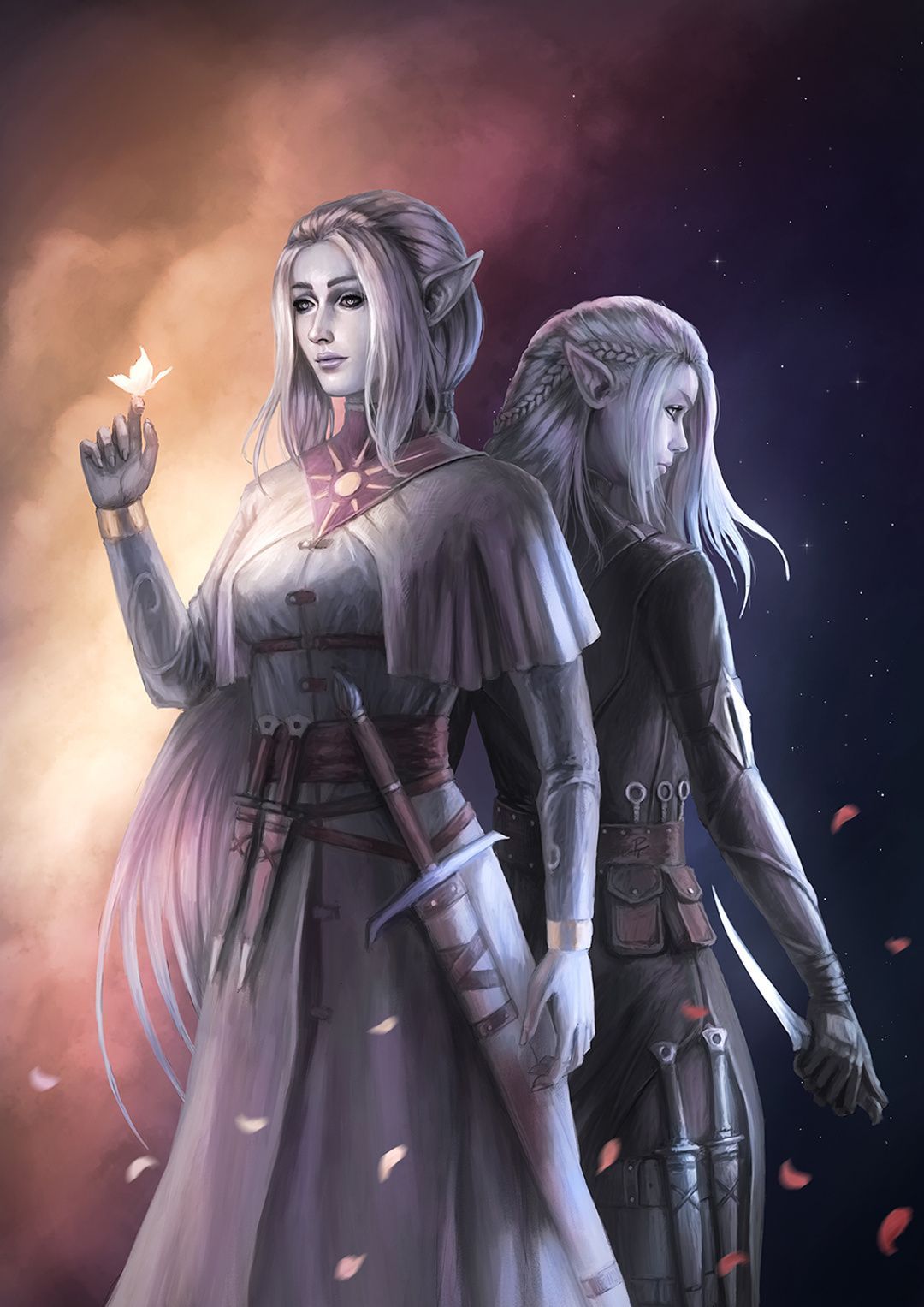
After a long night’s argument, Esriella explained it thus: what we call “fate” is simply the chain of probabilities: each choice, each accident, leading from one outcome to the next, all of it shaped by innumerable events before it. I remarked that by such a definition, fate does not truly exist; there is only cause and effect, endlessly branching. She disagreed. If someone can see not just one choice, but the entire branching tree of possibilities, and weigh which branches are most likely to be walked, then they can see the “fate” of a person, a kingdom, even the world. That, she says, is what the Goddess of Fate does: she perceives the full pattern, while the other gods press their fingers upon particular branches to tilt the odds.
If fate is both certain in its great arcs and yet can be altered by will and intervention, I confess I do not see what use the word has beyond comforting the pious. I dearly love my half-aelv friend, but she trusts the gods too readily for my taste. I will accept probabilities and patterns, but I will not let myself be steered by “fate.”
— from the research notes of Zyr’Magi Tes’Lothen, “Magi the Blade”, high-aelv scholar, mage, and swordsman