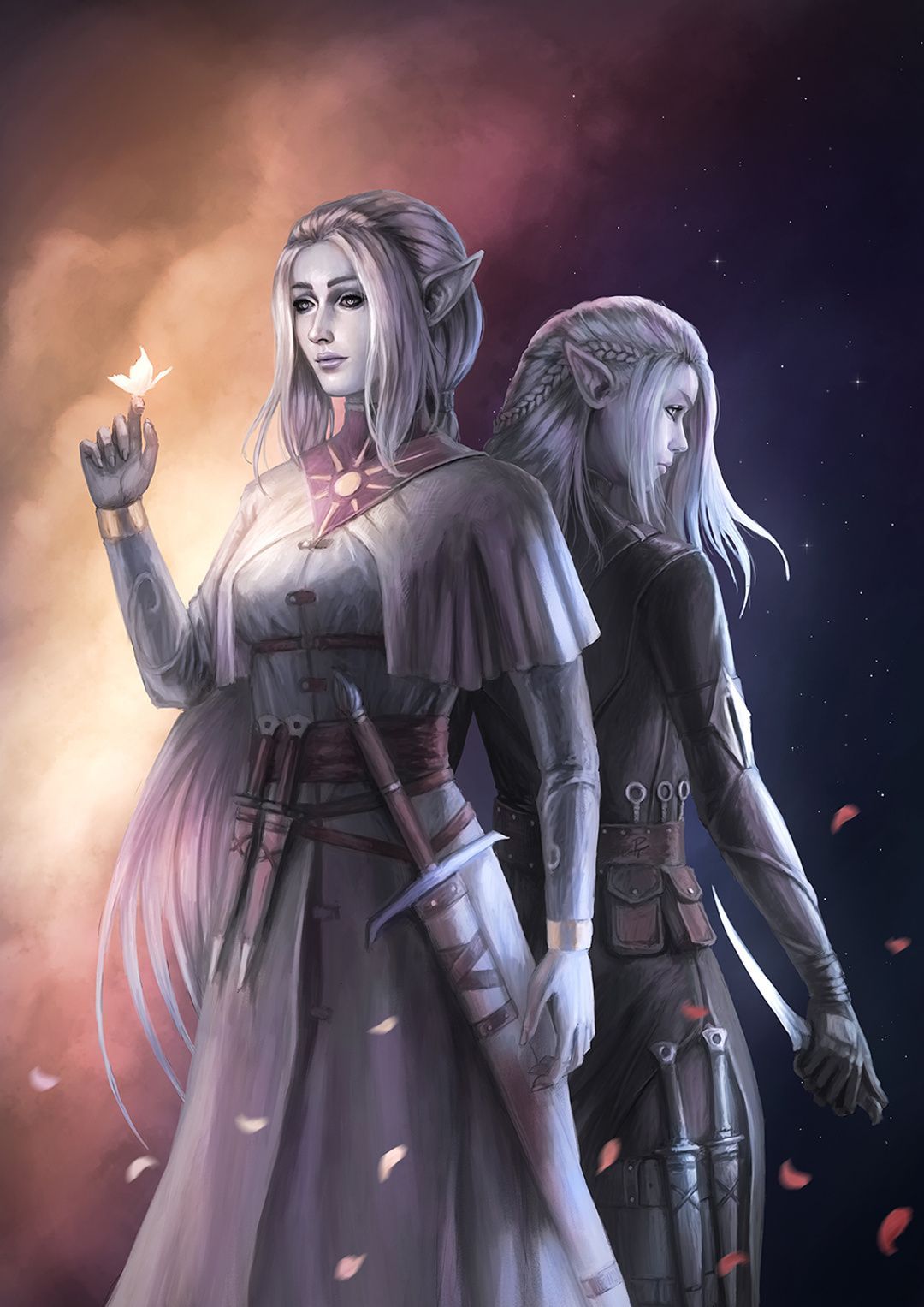
Reactions to the pale-aelvar vary wildly by culture, though none could be called welcoming. Among humans, commoners tend toward panic and violence (typically riots, thrown stones, raised pitchforks, and torches) at the mere sight of one. Their nobility, by contrast, are more afraid with them than of them: pale-aelvar have earned a reputation as peerless assassins who’s names live through the centuries, so nobles either try to have them killed quietly or, more insidiously, attempt to hire them to settle their own disputes in blood. Though, I must say, that usually backfires as pale-aelv assassins typically kill (or grant “mercy”) on behalf of their Goddess alone.
Most high-aelvar harbor a deep, almost doctrinal hatred, viewing the pale-aelvar as heretical monstrosities and attack on sight when they can; given the long history of atrocities between us, this is less irrational than it first appears. Wood-aelvar, more superstitious in this regard, pity them but keep them at bow and spear’s length, convinced that pale-aelvar presence brings misfortune to their forests, and will drive them away if warnings are ignored. Dverger find them simply abhorrent. Believing them treacherous, manipulative, and without honor, and deny them entry to their cities, sometimes escorting that refusal with hunting parties. Of all these responses, the human one is the most tangled: equal parts terror, loathing, fascination, and opportunism.
— from the research notes of Zyr’Magi Tes’Lothen, “Magi the Blade”, high-aelv scholar, mage, and swordsman