The world is very fond of its monsters, especially the kind it can point at in the street. Tales abound of “beastfolk,” human–varvarski offspring, children with dragon’s blood, and hybrids of every stripe used to frighten children and excuse cruelties. In all my centuries, I have never seen a true human–varvarski cross, nor any convincing evidence one has ever existed; varvarski typically kill and eat their captives, not keep them long enough for… other uses. As for “draconic bloodlines,” I suspect those are families flattering themselves for having sharp cheekbones and bad tempers. Dragons are mere beasts after all.
Half-aelvar and quarter-aelvar, however, are very real, and the social weight they carry is heavy enough. Among human nobles, they are walking contradictions: coveted for their beauty and longevity, and despised for what their blood implies. The same lords who secretly yearn to look and live more like aelvar balk at mixing our blood into their own lines; they flatter us at court, then use slurs behind the backs of those with more power than they can safely insult to their faces; my half-aelv friend Esriella and her quarter-aelv son Valin among them. In realms like the Drak’nir Empire, where aelvar slavery persists in the shadows of the “noble” elite, any child born of such unions is usually “disposed of” quickly and quietly. Common-born humans and most dverger, by contrast, are often far kinder. Suspicion softens once they share work, food, or danger with a half- or quarter-aelv; familiarity does what doctrine and belief rarely does.
My own people are not innocent in this. High-aelvar tend to pity those who are not fully aelvar. My kind look at a half- or quarter-blood child and see a life cut short by centuries; for any aelv parent, the knowledge that their child is almost certain to die before them is a wound that never fully closes... no one wishes to outlive their children, nor burden them with the pain of not belonging anywhere, though many of us still treat them with respect. The wood-aelvar feel much the same, but their response is harsher: they will not allow a mixed child to be raised in their villages. They claim it is too great an emotional burden on clan and village to watch a beloved child’s life run out so much sooner than their own, and so such children are usually brought up among humans instead.
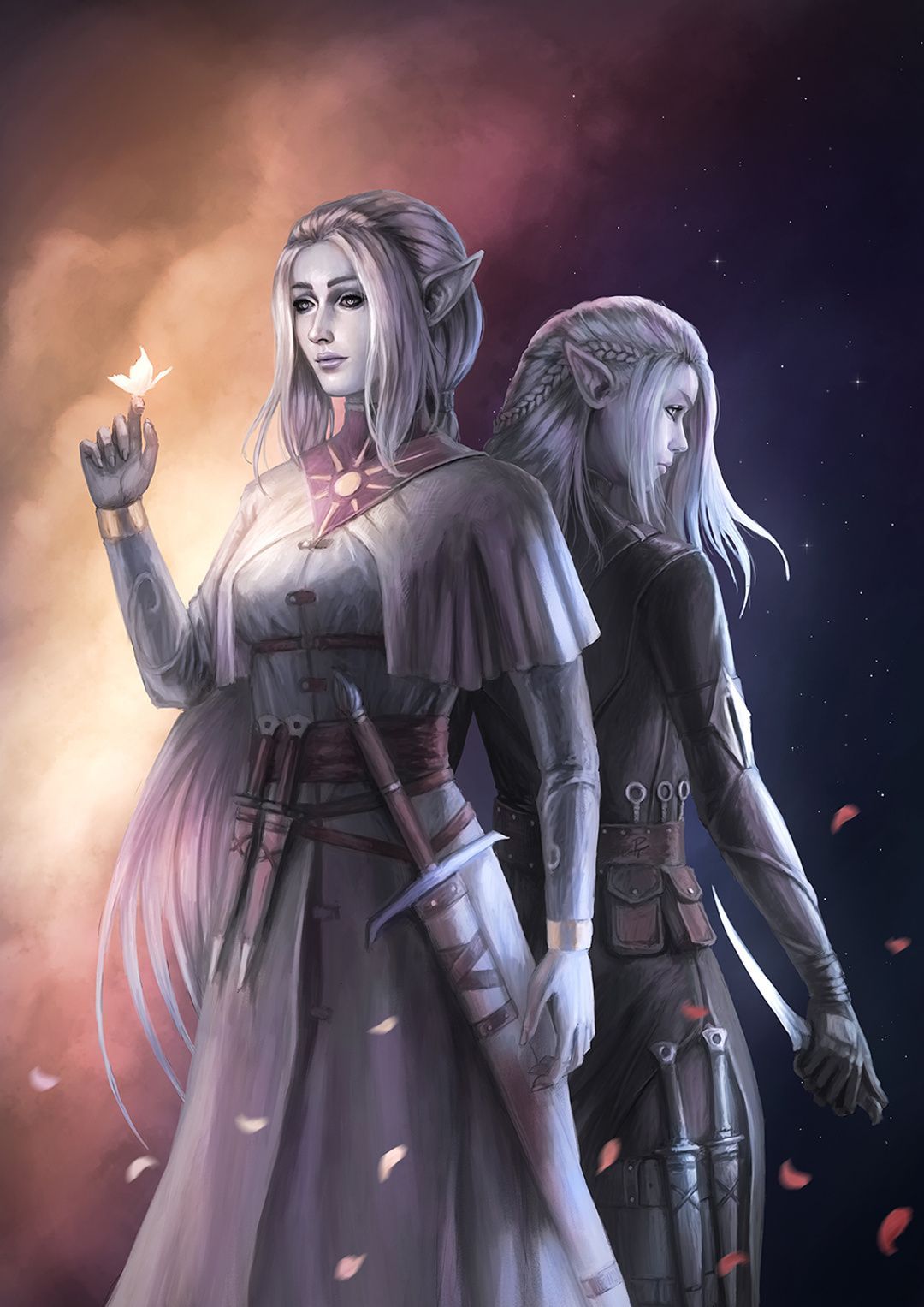
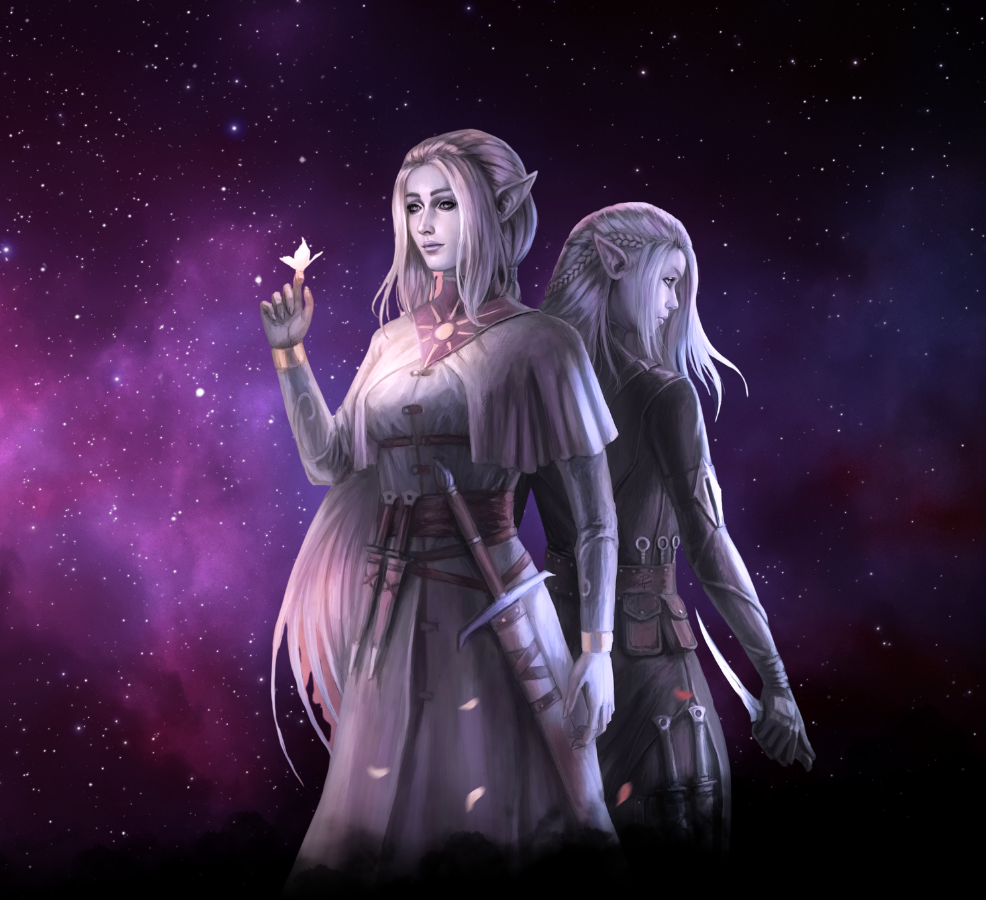
Of the pale-aelvar, I would rather write little here. From what Isha has told me, the fate of any child born of a pale-aelv master and a human slave is almost always the same, and it ends at the altar of the Goddess of Darkness. Such offspring are considered offerings to the Goddess of Darkness, not as members of a family. Pale-aelv who couple with other aelvar races are no better regarded and end in the same manner; in pale-aelv eyes, those children are tainted in precisely the same way. Pale-aelvar women who “sully” themselves in such a manner, are typically offered alongside their child. Such double-standards are disgusting.
To my knowledge, there are no dverger hybrids that exist. Whether if it is from inability or intention, I cannot say. Dverger, like usual, are tight-lipped on the subject.
There is one more, quieter category: full-blooded aelvar born of parents from different branches: say, a high-aelv and a wood-aelv. Such children are, in theory, accepted; in practice, they rarely feel they belong fully to either side. Many of them drift into the human world and stay there, often in the company of other high- and wood-aelvar who have left behind the rigid expectations of their homelands.
It is a curious irony that among humans; short-lived, impulsive, frequently cruel; those who do not fit in neat boxes often find the only homes that truly feel like theirs.
— from the research notes of Zyr’Magi Tes’Lothen, “Magi the Blade”, high-aelv scholar, mage, and swordsman